Home battery storage lets you use electricity when it suits you rather than when it is made or when it is expensive. A battery stores surplus solar from the afternoon, or cheap grid power from the night, and runs your home from it at the times you would otherwise pay full price. We fit batteries to existing panels from £3,995 and as part of a solar package from £9,295, with VAT at 0%.
- From £3,995 for a 5 to 10kWh battery added to existing panels
- 26.32p per kWh: the capped daytime price a battery helps you avoid
- 10 years or more typical manufacturer battery warranty
- 0% VAT on home batteries until 31 March 2027
How a home battery earns its keep
A battery makes money in two ways, and the best setups use both.
Storing solar
Panels make most power around midday. A battery soaks up whatever the house is not using and releases it in the evening. Every stored kWh replaces one you would have bought at the price cap rate of 26.32p, instead of exporting it for an SEG rate that ranges from 4.1p to around 20p depending on your supplier.
Charging overnight on a time-of-use tariff
Time-of-use tariffs charge less for electricity at quiet times, usually overnight, and more at the evening peak. A battery can fill up during the cheap window and run the house through the expensive hours. In winter, when panels make little, this is what keeps a battery working. With solar, the battery can also hold power back and export it at the most valuable times on tariffs that pay more at peak, such as Octopus's Prime Outgoing, which pays 16p per kWh from 4pm to 7pm.
Battery sizes and what they suit
| Usable capacity | Typical fit | Notes |
|---|---|---|
| About 5kWh | Smaller homes, lower evening use | Covers a typical evening of lights, cooking and TV |
| 5.8 to 8kWh | Two to four bedroom homes with 4kW or so of panels | The size in our 4.4kW solar and battery package |
| 10kWh and above | Larger homes, EV owners, heat pumps, big arrays | Makes most sense on a time-of-use tariff |
Most home batteries are modular, so some can be extended later by adding a module of the same model. We tell you at survey whether the model we recommend can grow. For a worked example, read what size solar battery do I need.
What home batteries cost
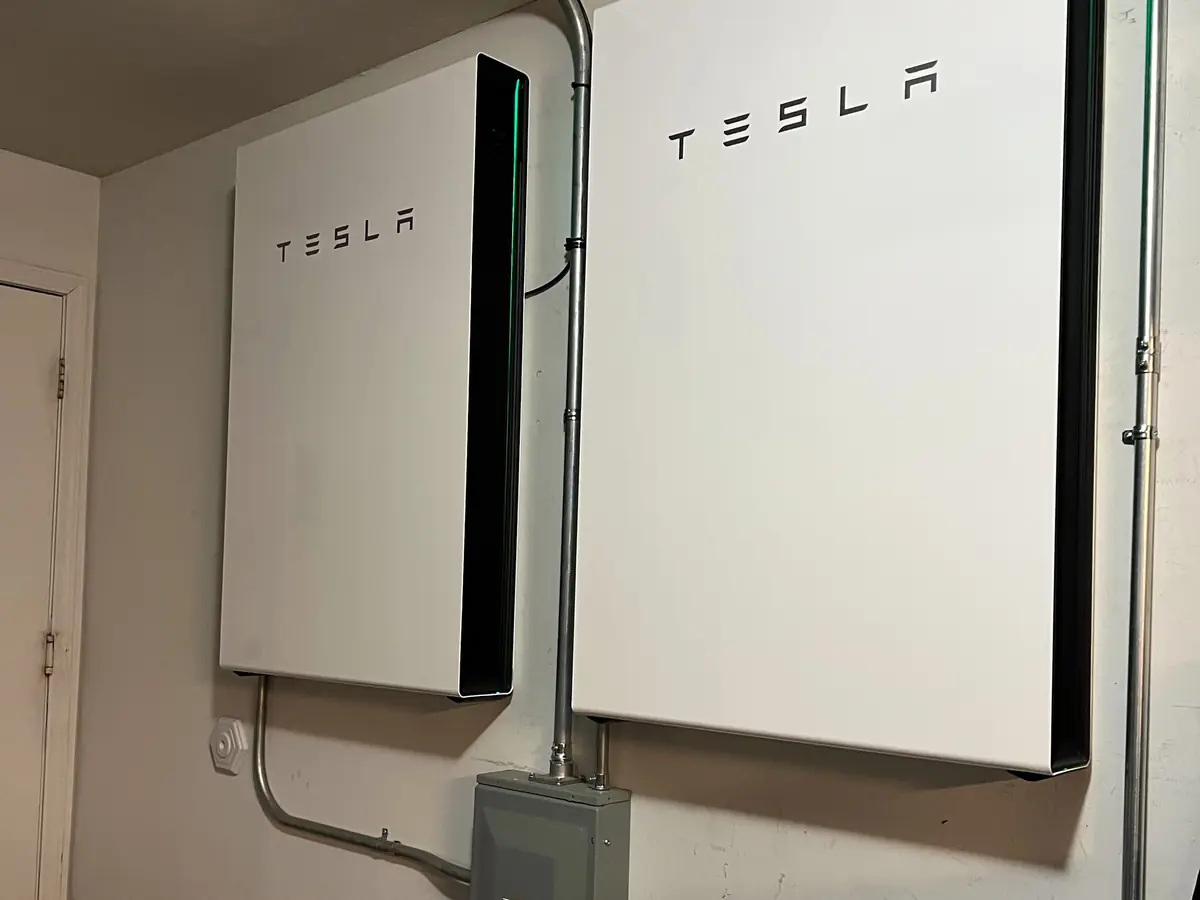
Which? reports installed prices from under £2,000 to around £10,000, with a 13.5kWh Tesla Powerwall at about £6,200. The Energy Saving Trust puts a 5kWh battery at around £4,600, and installers quote £4,000 to £9,500 for 10kWh. Our battery retrofits start from £3,995 and our solar and battery packages from £9,295. Our solar battery cost guide breaks down the market in more detail.
Backup power (EPS)
Most people assume a battery keeps the lights on in a power cut. By default it does not: grid-connected systems shut down when the grid fails, so they cannot send power down a line an engineer is working on.
Many batteries can run an emergency power supply (EPS) circuit, a separate small circuit fed from the battery that stays live in a cut. It is typically used for the fridge, broadband router and a few lights. Whole-home backup needs extra switchgear and is not available on every model. We price both on your quote if you want them.
Where the battery goes and safety
Most home batteries sold in the UK now use lithium iron phosphate (LFP) cells, a chemistry that is more stable than the cells in phones and older batteries. We still follow current British fire safety guidance for batteries in homes, so a battery goes in a garage, utility room, outbuilding or on an outside wall, never in a loft, bedroom or escape route. We check wall strength, ventilation and clearances at survey.
Controlling your battery
Every battery we fit comes with an app that shows, in real time, what the panels are making, what the house is using, how full the battery is and what is going to or from the grid. Most batteries run in one of a few modes:
- Self-use: the battery fills from solar surplus and empties into the house whenever you need power. The simplest setting for most homes.
- Time-of-use: the battery charges from the grid in a cheap window you set, and saves its charge for the expensive hours.
- Backup reserve: a share of the battery is held back for power cuts, if you have an EPS circuit.
We set the mode and schedule to match your tariff at handover, and our remote monitoring checks help spot a battery that has stopped cycling as it should.
What a battery install involves
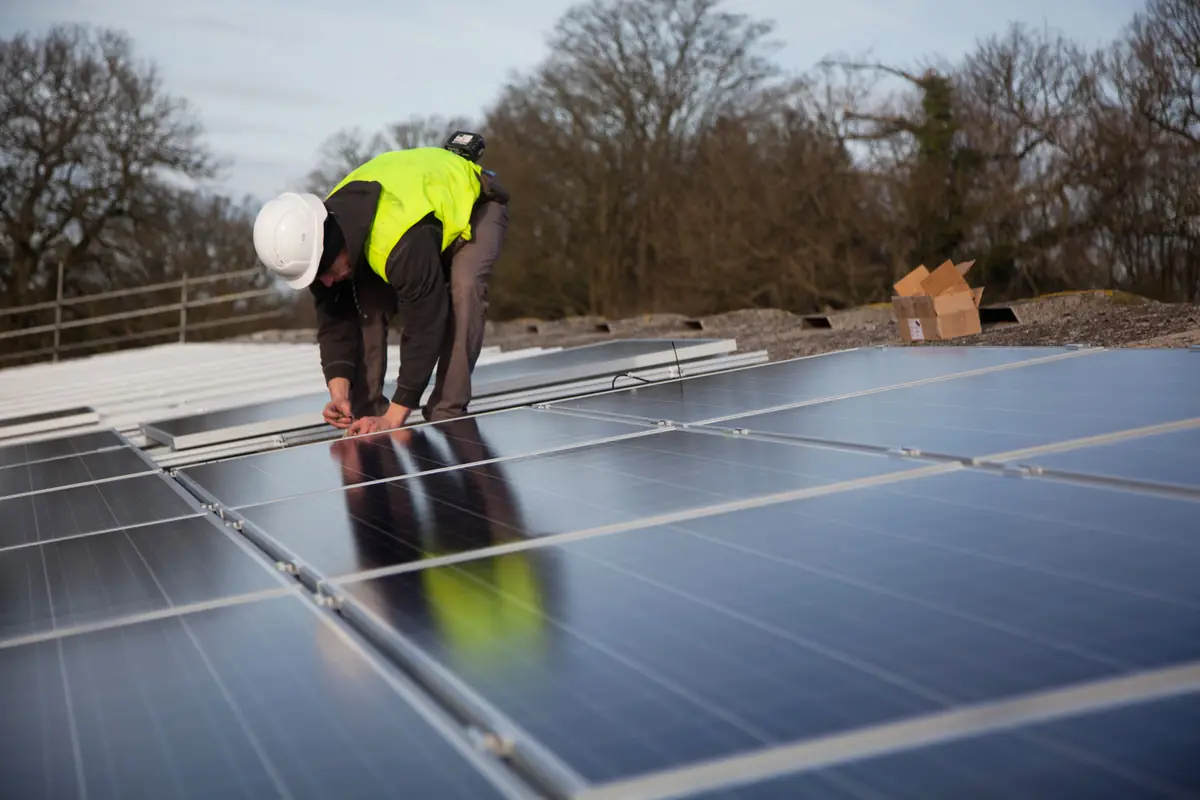
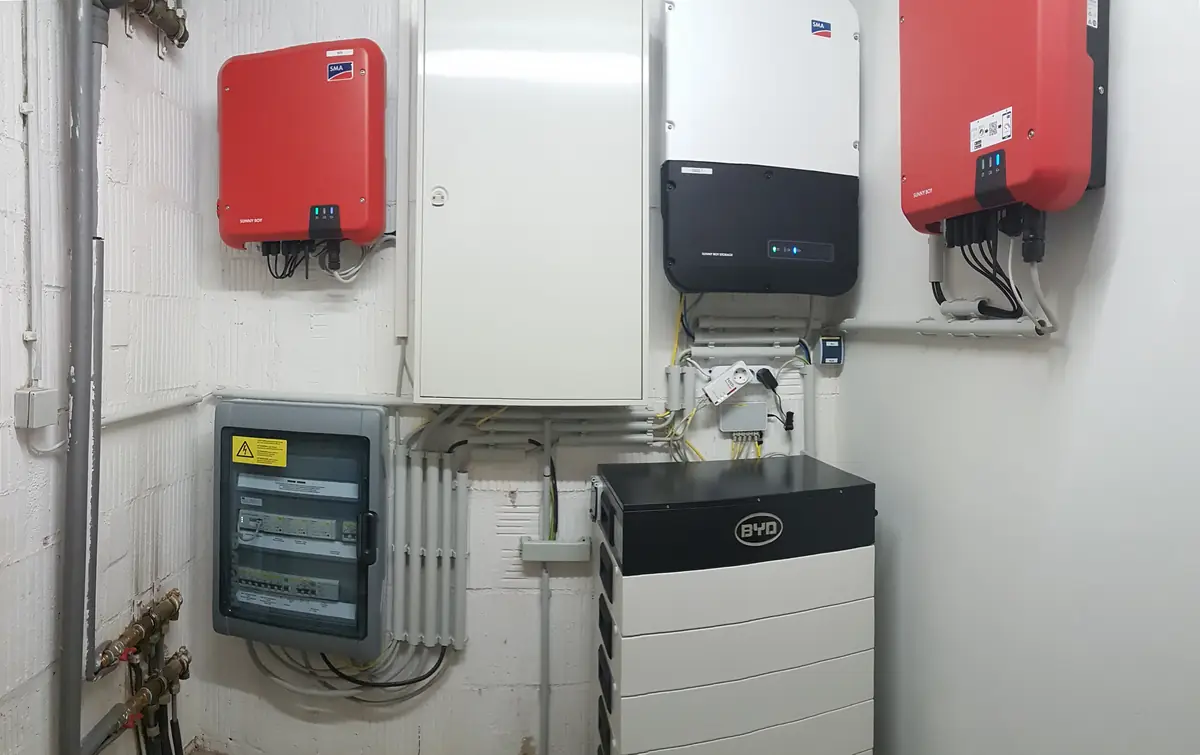
Adding a battery is usually a one-day job with no scaffolding, because nothing happens on the roof. The team mounts the battery and, where needed, its inverter, connects it to the consumer unit, fits a meter clamp so it can see what the house is using, and commissions it. We also notify your network operator, since a battery adds to your system's capacity. You can read about each stage on our how it works page.
Batteries with and without solar
A battery on its own, with no panels, can still save money through tariff shifting, and we can fit one on that basis. Paired with panels it does more, because it has free energy to store for much of the year. If you already have panels, see adding a battery to existing solar panels, including systems still on the Feed-in Tariff.
Tariff matters: a battery on a flat-rate tariff only earns from solar. On a time-of-use tariff it earns all year. Read our guide to the best energy tariffs for solar and batteries before you switch.
Sources: Which? solar panel battery storage; Energy Saving Trust, battery storage; Stratford Energy battery prices; Octopus Outgoing and Prime Outgoing; Ofgem price cap; HMRC VAT Notice 708/6.