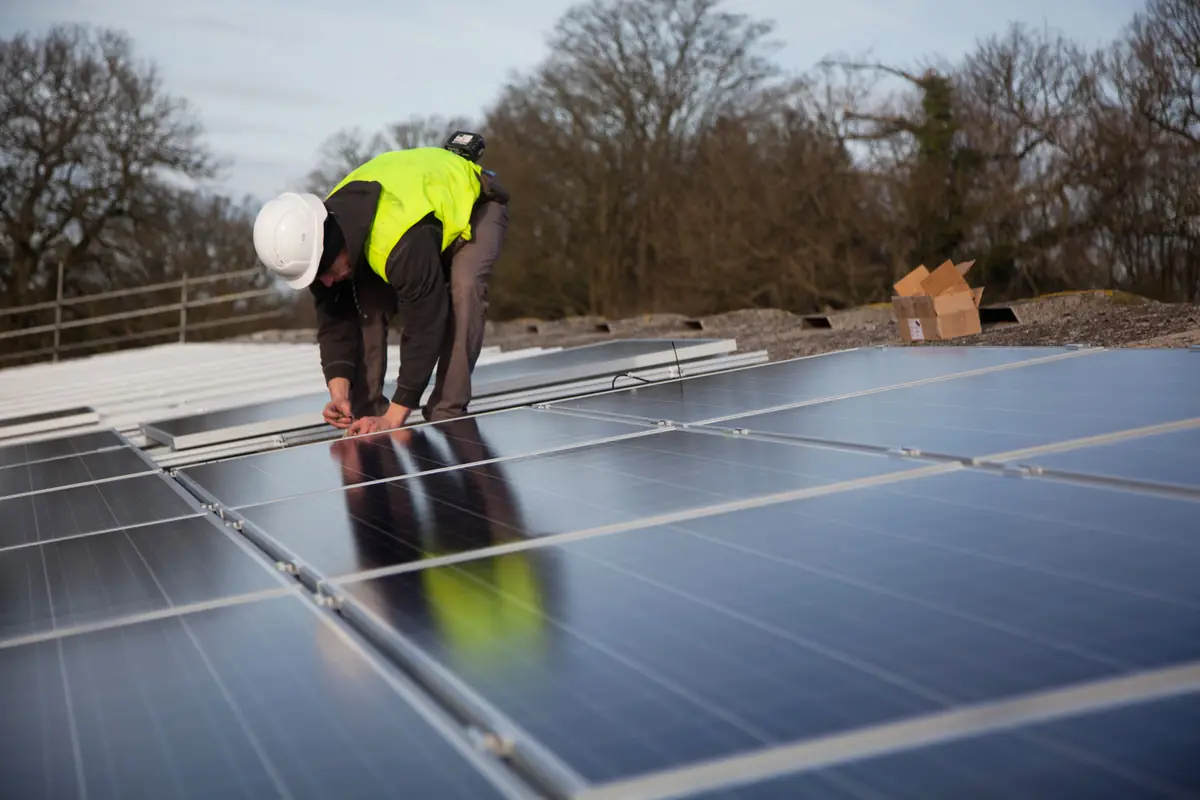
Solar panel installation with Kingsmead Solar starts from £6,495 for a 4.4kW system: ten 440W all-black panels and a hybrid inverter, fitted by our own employed team in one to two days. That price includes scaffolding, MCS certification, the network operator paperwork and VAT at 0%, and the figure on your written quote is the figure you pay unless the roof turns out not to be as described.
- From £6,495 for a 4.4kW system, VAT at 0%
- 1 to 2 days on the roof for a typical home
- 850 to 1,150 kWh a year per kW of panels across England
- 25 to 30 years manufacturer warranty on the panels
- 10 years insurance-backed warranty on our workmanship
What we fit
Every system is designed for your roof, but the parts come from a short list we know well and can support for the life of the system.
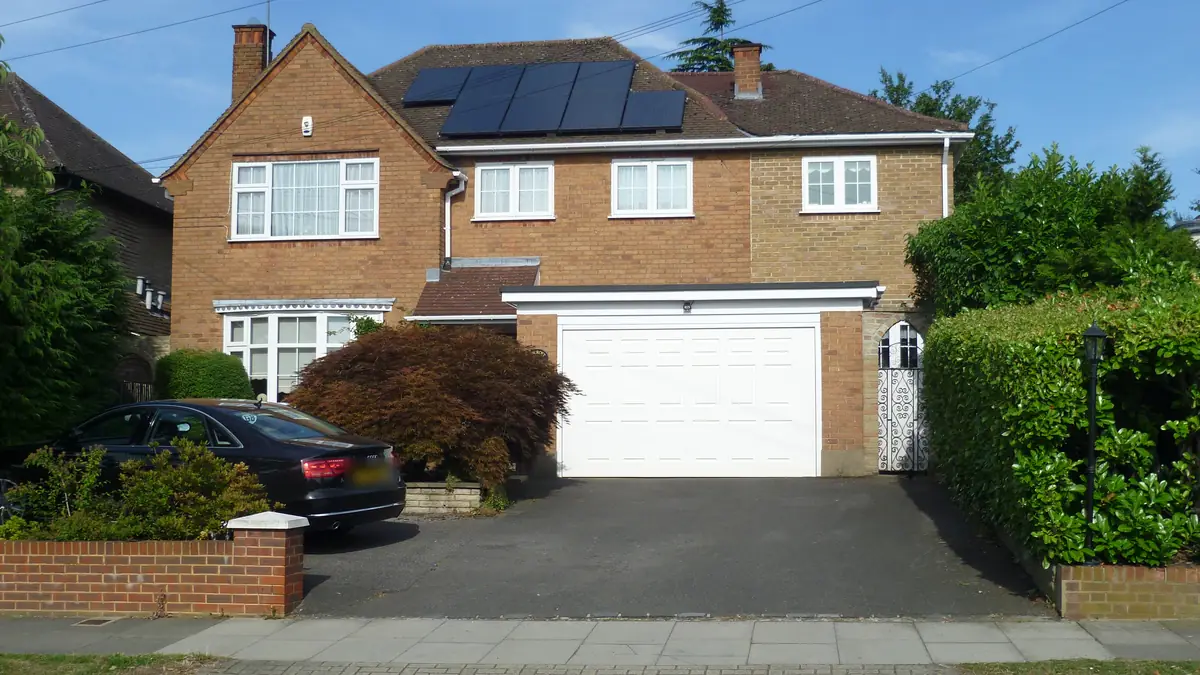
- Panels: 440W to 460W all-black monocrystalline panels from tier one manufacturers, the makers ranked most bankable by the industry. All-black frames and backsheets sit quietly on slate and dark tile.
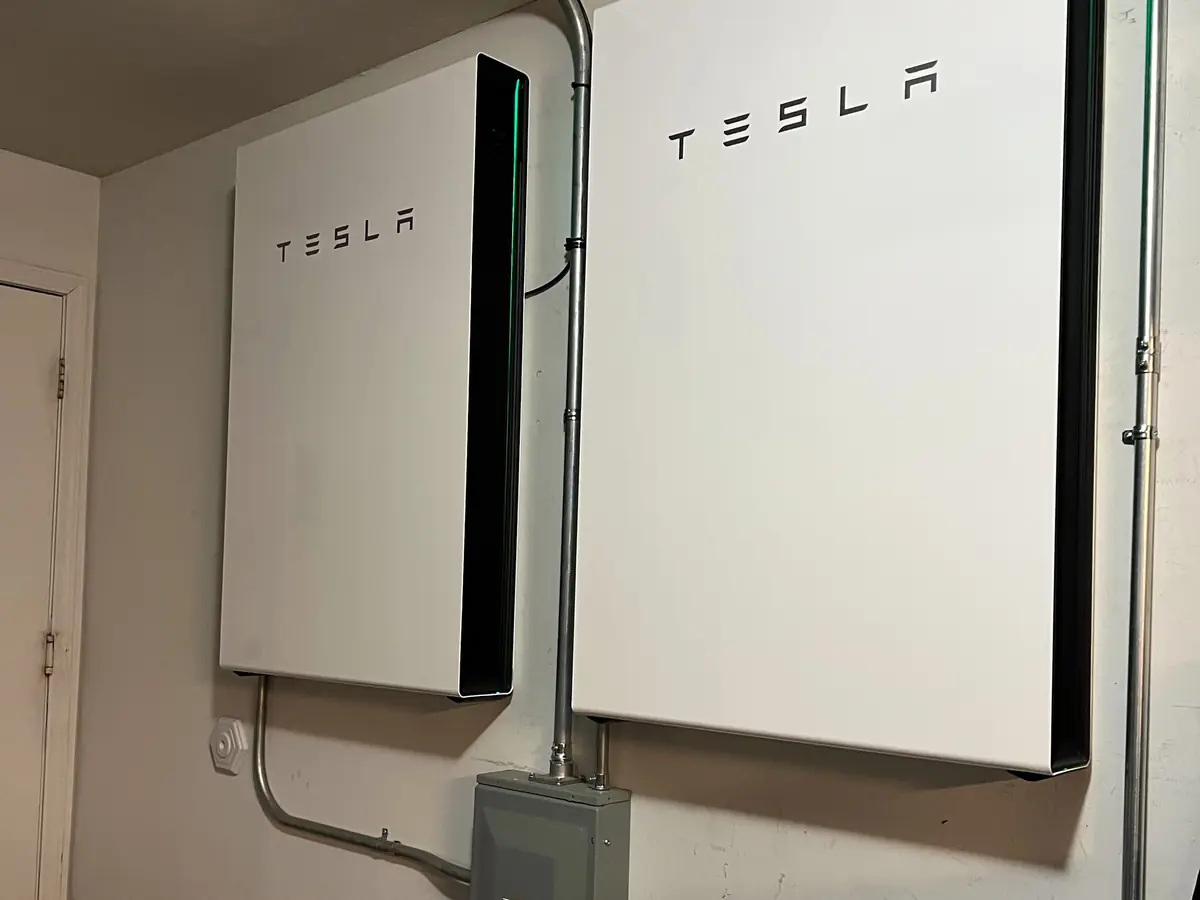
- Hybrid inverter: converts the panels' DC power into the AC your home uses, and has a battery input built in, so adding storage later is a simple job rather than a second inverter.
- Optimisers where there is shade: if a chimney, dormer or tree shades part of the array, we fit optimisers to the affected panels so one shaded panel does not drag down the rest of the string.
- Bird mesh: pigeons like the warm, sheltered gap under panels. Mesh around the edge of the array keeps them out and saves a messy call-out later.
- Isolators, generation meter and monitoring: so you, and we, can see what the system is producing from a phone app.
Roof types we fit to
Tiled roofs
Most homes in England have concrete or clay tiles. We fix stainless steel roof hooks to the rafters beneath the tiles, run aluminium rails across them and clamp the panels to the rails. The tiles go back over the hooks, so the roof stays weathertight and nothing is drilled through the tile face.
Slate roofs
Natural slate is brittle, so it takes more care and more time. We use slate hooks or flashed brackets, carry spare slates on every job, and replace any that crack while we work. Allow for a slightly higher price than an equivalent tiled roof.
Flat roofs
On flat roofs, including garages and extensions, panels go on angled frames, either weighted with ballast or fixed through the roof covering and sealed. We check that the roof deck can take the load and that the covering is in good enough condition to last as long as the panels.
Ground mounts
If your roof is shaded or faces the wrong way but you have open land, a ground-mounted frame can face due south at the ideal angle. We trench an armoured cable back to the house. Ground mounts have their own permitted development limits, which we check at survey.
How much a system makes
Output depends mainly on where you live and which way the roof faces. Our own PVGIS modelling for a south-facing roof at 35 degrees gives 886 kWh per kW of panels a year in Manchester, 972 in Birmingham, 1,025 in London and 1,159 in Brighton. A 4.4kW system in Birmingham therefore makes roughly 4,280 kWh a year, which is in line with the Energy Saving Trust's estimate of about 3,700 kWh for a 4kW system in England.
East and west-facing roofs make about 15 to 20% less than south, and often suit families who use more power in the morning and evening. North-facing roofs make much less, and we will tell you plainly if yours is not worth covering. See local figures on our pages for solar panels in Manchester, Bristol and other towns, or read is my roof suitable for solar.
What affects the price
- System size: more panels cost more in total but less per kW, because scaffolding, the inverter and labour are shared.
- Roof height and access: scaffolding is always included, but a three-storey house or a roof over a conservatory needs more of it.
- Roof type and number of faces: slate takes longer than tile, and splitting panels across two roof slopes adds rails and cabling.
- Shading: optimisers add to the cost of the panels they are fitted to.
- Your consumer unit: an old fuse board may need replacing before we can connect safely.
- A battery: the biggest single addition, covered on our solar panels with battery page.
Our solar panel cost guide sets out our prices against the national figures and explains each of these extras.
The survey
Every installation starts with a free survey, either in person or remotely using your photos and satellite imagery. We take no deposit until it is done. The surveyor checks:
- roof direction, pitch, shading and usable area
- the condition of tiles or slates, battens and rafters
- loft access and where the inverter and any battery will go
- your consumer unit, earthing and electricity meter
- the cable route from roof to consumer unit
- whether you are in a conservation area or the house is listed
From that we design the system, model its yearly output and send a fixed written price. Most homes are covered by permitted development, so no planning application is needed as long as panels project no more than 200mm from the roof slope and do not sit above the highest part of the roof. Listed buildings need consent, and conservation areas have extra limits.
Network operator approval
Every solar system has to be registered with your local distribution network operator (DNO). Systems whose inverter output is up to 16 amps per phase, about 3.68kW on a normal single-phase home, go under the G98 process: we fit, then notify the DNO within 28 days. Larger systems, or solar plus a battery above that limit, need a G99 application before we install. We handle both, and build any waiting time into your install date.
Getting paid for what you export
When the panels make more than your home is using, the surplus goes to the grid. Under the Smart Export Guarantee (SEG), larger suppliers must pay you for it. Rates vary widely: Octopus pays 4.1p per kWh on its basic SEG tariff and 12p on Outgoing Octopus, and some supplier-linked tariffs pay more. You need the MCS certificate we issue and a smart meter. We help you choose and sign up at handover. Our Smart Export Guarantee guide compares the current rates.
Thinking about a battery: without one, most homes use only part of what the panels make and export the rest. A battery stores daytime surplus for the evening, when import costs 26.32p per kWh under the October 2026 price cap.
Sources: Energy Saving Trust, solar panels; GPDO 2015, Schedule 2, Part 14; Octopus SEG tariff; Outgoing Octopus; Ofgem price cap; HMRC VAT Notice 708/6. Town output figures are our own PVGIS modelling.