Solar panels with battery storage let you keep the power your roof makes during the day and use it in the evening, instead of exporting it cheaply and buying it back at full price. Our packages start from £9,295 for a 4.4kW system with a 5.8kWh battery, and from £12,495 for 6.2kW with 10kWh, both with VAT at 0%, scaffolding and MCS certification included.
- From £9,295 for 4.4kW solar and a 5.8kWh battery
- From £12,495 for 6.2kW solar and a 10kWh battery
- 26.32p per kWh: the import price a stored unit replaces (Oct to Dec 2026 cap)
- 0% VAT on panels and batteries until 31 March 2027
Why add a battery to solar
Solar panels produce most in the middle of the day, when many homes are empty or using little. Without storage, that surplus goes to the grid and earns an export rate, anywhere from about 4p to 20p per kWh depending on the tariff. In the evening you then buy power back at the price cap rate, 26.32p per kWh from October to December 2026.
A battery closes that gap. Every kWh you store at lunchtime and use at teatime is worth the full import price to you, rather than the export price. On a typical 12p export tariff, that is about 14p more per kWh, and over a sunny summer a battery can cycle almost every day.
The second reason is tariffs. With a battery you can charge from the grid overnight on a time-of-use tariff and run the house on that cheaper power through the day, which keeps the battery working in winter when the panels make less. See our home battery storage page for how that works in practice.
Our solar and battery packages
| Package | Panels | Battery | Often suits | Price from |
|---|---|---|---|---|
| Solar only | 10 x 440W (4.4kW) | None, battery-ready inverter | Homes with daytime use, adding storage later | £6,495 |
| Solar and battery | 10 x 440W (4.4kW) | 5.8kWh | Two to three bedroom homes with moderate evening use | £9,295 |
| Larger solar and battery | 14 x 440W (6.2kW) | 10kWh | Larger homes, electric cars, heat pumps | £12,495 |
Prices include VAT at 0%, scaffolding, the hybrid inverter, DNO registration and your MCS certificate. For comparison, the government's Warm Homes Plan puts the average cost of solar plus a battery at £9,000 to £12,000.
How the system fits together
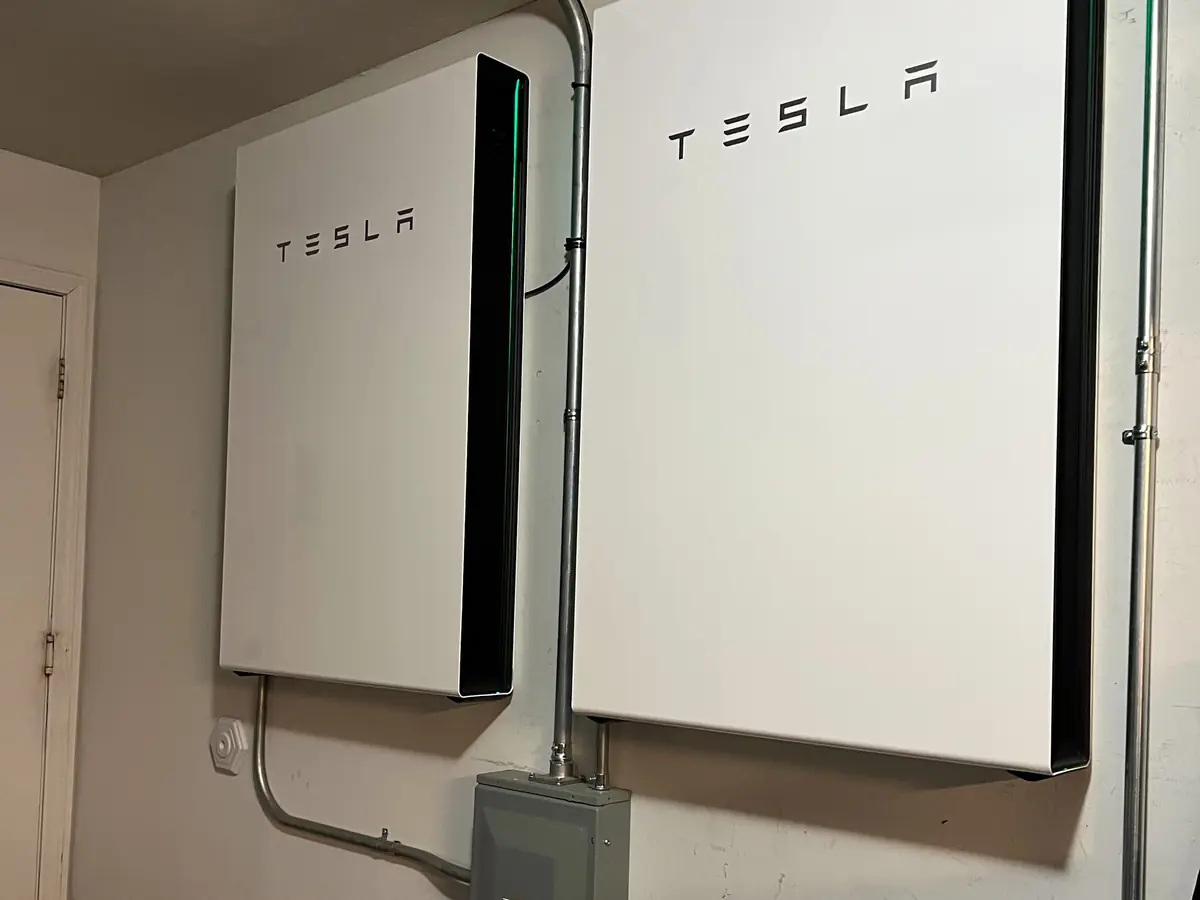
We normally fit a single hybrid inverter that handles both the panels and the battery. The panels charge the battery directly on the DC side, which loses less energy than converting to AC and back, and there is one box on the wall rather than two. The battery sits in a garage, utility room or on an outside wall, following current fire safety guidance for home batteries, which rules out places like lofts and escape routes.
The inverter decides, second by second, where power goes: first to what the house is using, then into the battery, then out to the grid once the battery is full. In the evening it runs the house from the battery until it is empty or reaches the reserve you set in the app.
Choosing the right battery size
Bigger is not automatically better. A battery only earns its keep on the kWh it actually cycles, so we size it on your usage rather than the largest one that fits.
- Look at your evening and overnight use. A home that uses 6 to 8 kWh between 5pm and breakfast is well matched to a 5.8kWh battery.
- Look at the summer surplus. A 6.2kW array on a south roof can make far more in June than a small battery can hold, which is where 10kWh pays off.
- Plan for what is coming. An electric car or heat pump changes the picture, and the larger battery makes more sense on a time-of-use tariff.
Our guide to what size solar battery you need works through examples, and the solar savings calculator gives a figure for your own home.
Backup power in a power cut
A grid-tied system switches off in a power cut by design, so it cannot feed a live cable that engineers are working on. If backup matters to you, we can fit an emergency power supply (EPS) circuit that keeps selected sockets or lights running from the battery. Whole-house backup is possible on some systems but needs extra switchgear. We price either option on your quote so you can decide.
Batteries in winter
From November to February, a 4.4kW array makes only a fraction of its summer output, and on many days the house uses all of it straight away. A battery does less with solar in those months, which is why we set it to charge overnight on a cheap tariff if you have one. Over a full year that keeps the battery earning in every season, not just in summer. Our guide on whether solar panels work in winter has more.
What install day looks like
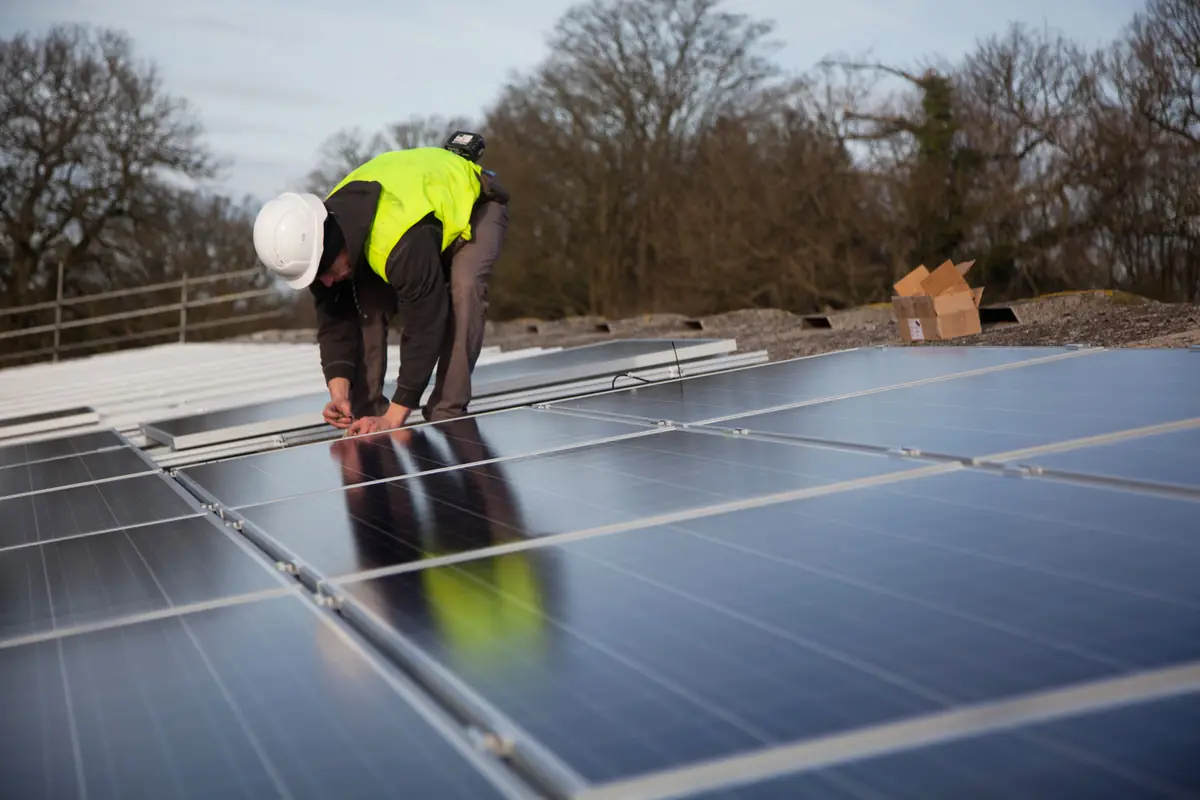
A solar and battery install usually takes one to two days. The roof work is the same as a solar-only job, while the electrician fits the hybrid inverter and battery, connects everything to your consumer unit and commissions the system. We set up the app, the battery mode and your tariff schedule before we leave, and show you how to change them.
Already have panels?
You do not need a new system to get storage. We add batteries to existing panels from £3,995, including older systems still paid on the Feed-in Tariff. See add a battery to existing solar panels.
Is it worth it: a battery raises the upfront cost by roughly £2,800 on our 4.4kW package, so payback depends on your usage and tariff. We model it at survey and show you the numbers with and without, so you choose on facts. Our full solar panel cost guide has more detail.
Sources: Ofgem energy price cap; Outgoing Octopus export rates; gov.uk Warm Homes Plan announcement; HMRC VAT Notice 708/6; Which? solar battery storage.